|
The Step Beyond Hotel Sustainability for Long-Term Value
We can all agree that sustainability has become an essential part of hotel operations. It is now widely understood that reducing waste, lowering energy use, improving sourcing practices, and managing food efficiency are part of running a responsible business and are no longer “optional” considerations.

Sustainable tourism, in the broader sense, aims to minimise negative impacts while maximising positive ones for destinations, communities, and the industry itself.
For hotels, this has clear operational benefits. Better resource management can reduce costs, improve efficiencies, and support stronger long-term planning. In many organisations, sustainability has become part of the operational checklist: energy-saving systems, recycling programs, reduced single-use plastics, and more careful waste control. While these initiatives matter, and should remain a priority, the hospitality industry is being pushed to think beyond sustainability alone.
That is where the conversation around regenerative tourism begins. The Global Sustainable Tourism Council notes that regenerative tourism is often described as an approach that leaves a destination in a better condition than it was found. In other words, the goal is not only to reduce harm, but to contribute positively to the place itself.
Sustainability is often about maintaining balance and reducing damage over time; regenerative thinking goes a step further. It asks whether a hotel, resort, or tourism business is actively helping restore, strengthen, or enrich the environment and community around it. That may involve land stewardship, cultural preservation, local partnerships, education, or deeper investment in the long-term health of the destination.
For hospitality leaders, this idea is becoming increasingly relevant because it connects environmental responsibility with something else the industry understands well: identity and value.
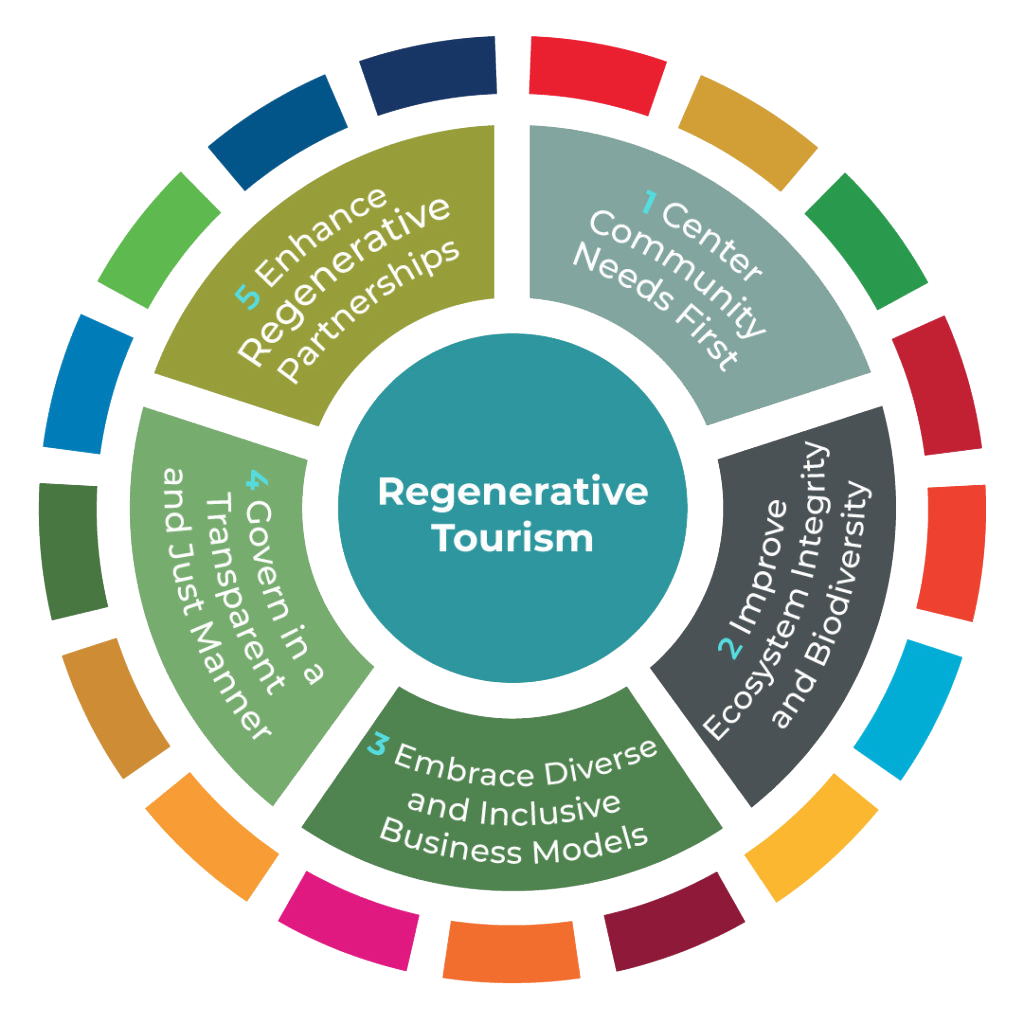 Sustainability may not always be the factor that directly sells a room on its own. Guests rarely choose a hotel based only on an internal checklist of environmental measures; however, “stewardship”—when it is genuine—can shape a property’s story, reputation, and market position. A hotel that is known for protecting local heritage, supporting community livelihoods, respecting its natural setting, and contributing meaningfully to the destination can create a stronger emotional connection with guests. That, in turn, can support visibility, loyalty, and brand distinction. Sustainability may not always be the factor that directly sells a room on its own. Guests rarely choose a hotel based only on an internal checklist of environmental measures; however, “stewardship”—when it is genuine—can shape a property’s story, reputation, and market position. A hotel that is known for protecting local heritage, supporting community livelihoods, respecting its natural setting, and contributing meaningfully to the destination can create a stronger emotional connection with guests. That, in turn, can support visibility, loyalty, and brand distinction.
In practical terms, stewardship means that a hotel is not simply operating in a destination; it is taking responsibility for its relationship to that destination. According to The Hotel Mogel Monthly Newsletter, being a steward means that “your hotel becomes both a protector of the past as well as a diligent patron for a better tomorrow.”
Let’s explore the “better tomorrow” here. That kind of responsibility can take different forms: investing in local sourcing, protecting surrounding ecosystems, working with local artisans and cultural groups, supporting conservation efforts, or designing guest experiences that create respect for place rather than simply consumption of it. For some properties, it may also mean rethinking development itself: not just asking what can be built, but what should be protected, restored, or strengthened for the future.
This is where regenerative tourism becomes more commercially interesting as well! In a competitive market, hotels are constantly being asked to justify rate, grow occupancy, and differentiate themselves in ways that feel credible. A property that demonstrates true stewardship can do more than reduce operating costs; it can build prestige, strengthen brand identity, and create a more compelling guest proposition. That is particularly relevant in luxury and experiential hospitality, where travellers are often drawn to properties that feel connected to their surroundings in a meaningful and responsible way.
Of course, the concept must be handled carefully. Even GSTC notes that while regenerative tourism has gained attention, its practical application is still developing… That means the term should not become another vague label added to marketing language without substance behind it.
For hotels, the opportunity lies not in adopting new buzzwords, but in deepening the ambition behind existing efforts.
The future of hospitality will not be shaped only by who operates most efficiently, but also by who builds the strongest relationship with place. Sustainability remains the foundation. It helps hotels reduce harm and operate more responsibly. Regenerative tourism, however, suggests a broader goal: that hospitality can leave something stronger behind—environmentally and economically—than what was there before.
For an industry built on place, experience, and even long-term reputation, stewardship may be where sustainability begins to translate not only into responsibility, but into real distinction.
Sustainability & Inclusion: A Title, or a Transformation?
This year, UN Tourism unveiled a roadmap positioning tourism as a driver of sustainability, resilience, and long-term development. The message is rather ambitious. It suggests that hospitality is no longer simply about rooms and service, but about impact—whether that’s environmental, social, or even economic.
At the same time, we have introduced, for the first time in our 2026 Global Salary Survey, the role of Director of Sustainability and Inclusion as a standard leadership position within many full-service hotels.
The title is becoming common, but the definition isn’t.
When we asked our global clients from Singapore to Dubai to the Caribbean what sustainability and inclusion mean within their organisations, the answers varied significantly. For some, sustainability focuses almost entirely on environmental metrics. For others, inclusion is a talent strategy. In many cases, the two functions are still operating separately. Yet when we examine how leading global organisations structure similar roles, a clearer pattern emerges.
A Director of Sustainability & Inclusion is not simply a compliance officer or a reporting function. The role touches everything from long-term planning to day-to-day culture and reporting.
In practice, this means:
- Leading and executing diversity and inclusion strategies aligned with long-term business objectives
- Spearheading programs that adapt across diverse talent pools and international vendor networks
- Overseeing large employee communities and improving collaboration across multiple stakeholder groups
- Creating structured feedback systems that move performance evaluation from reactive to developmental
- Establishing partnerships with educational institutions and advisory committees to strengthen recruitment pipelines
- Tracking and reporting quantitative and qualitative data around representation, growth, and engagement
The role is operational. It’s measurable, and it’s accountable. True sustainability extends beyond environmental initiatives. It includes building internal systems that are resilient over time, and ultimately comes down to whether your organisation can sustain itself through its people.
Inclusion, similarly, isn’t a standalone program. It shows up in hiring practices, promotion pathways, community engagement, and how feedback flows through an organisation. It’s reflected in whether leadership development is intentional, whether underrepresented talent is supported, and whether structured coaching replaces informal advancement.
From a recruitment perspective, this is where the conversation becomes critical.
The Director of Sustainability & Inclusion must be able to operate at both strategic and tactical levels. They need to understand data analytics and performance evaluation, but also culture, communication, and cross-functional leadership. They must be capable of establishing university partnerships, advisory boards, and internal resource groups, while simultaneously aligning those efforts with executive strategy.
In practical terms, this is an operational responsibility with clear business implications.
Environmental responsibility remains central to the conversation. Energy use, sourcing decisions, waste management--these still matter. But without internal oversight and follow-through, even well-designed sustainability initiatives tend to lose momentum. The same is true of inclusion. Without structure, measurement, and long-term commitment, good intentions fade quickly.
What we are beginning to see in stronger organisations is a shift toward integration rather than separation. Environmental initiatives are being discussed alongside talent development. Hiring strategy is being connected to long-term resilience. Leadership teams are treating sustainability and inclusion as ongoing operational considerations, not standalone programs.
As the Director of Sustainability & Inclusion role becomes more common across the global hospitality sector, the industry will need to move past broad language. Definitions are useful, but they are only a starting point. The real question is how these priorities are embedded into everyday decisions — who is hired, how performance is evaluated, how progress is tracked, and how accountability is maintained over time.
Sustainability and inclusion are no longer abstract themes. They increasingly sit alongside revenue and profitability as areas requiring consistent oversight.
Across the global hospitality industry, sustainability and inclusion are no longer being elbowed to the side for a conversation. What was once discussed mainly in brand statements, internal policies, annual reports, or even from our first article on the topic, is now moving closer to the centre of hotel operations. Increasingly, and pleasantly surprisingly, organisations are recognising that these priorities require direct leadership with measurable goals and consistent execution.
This noticeable shift is one reason why more hotels are introducing senior roles dedicated to Sustainability and Inclusion.
For years, sustainability in hospitality was often associated with environmental action alone: reducing waste, lowering energy consumption, sourcing responsibly, and improving resource efficiency… Inclusion, meanwhile, was typically placed under human resources, focused on hiring, employee engagement, and workplace culture. Both were/are important, but they were often managed separately and sometimes without enough influence at the executive level.
The big news is that model is beginning to change!
Hotels and hospitality groups are now facing more complex demands from owners, employees, guests, and business partners internationally. They are being asked not only how responsibly they operate, but how well they build teams, develop talent, engage communities, and create systems that can sustain long-term growth. In that environment, sustainability and inclusion are no longer abstract values; they are becoming leadership responsibilities.
The Director of Sustainability & Inclusion role is now reflecting a growing understanding that resilience in hospitality is not built only through revenue strategy or cost control; it is also shaped by the strength of internal culture, the quality of leadership development, the credibility of reporting, and the organisation’s ability to adapt over time. In practical terms, this means the role often sits at the intersection of operations, talent strategy, brand reputation, and long-term planning.
A hotel may have strong environmental initiatives on paper, but without someone accountable for implementation, measurement, and follow-through, those efforts can lose momentum. Likewise, a company may speak positively about inclusion, but if hiring pathways, promotion systems, and performance reviews do not support that message, the results remain unsurprisingly inconsistent.
More employers are realising that these areas need structure, and that structure can take many forms. It may include formal reporting on representation and engagement, partnerships with schools and universities to strengthen recruitment pipelines, better leadership development for underrepresented talent, stronger feedback systems, and greater alignment between executive priorities and day-to-day management practices. In some organisations, it also means connecting environmental goals with broader organisational decision-making rather than treating them as separate initiatives.
Importantly, the strongest leaders in this area are not simply advocates for a cause; they are expected to work across departments, interpret data, support culture change, and help leadership teams move from intention to accountability. They must understand how strategy translates into execution; they must also be able to communicate across a wide range of stakeholders, from ownership and senior executives to line employees, external partners, and community networks. For hospitality employers, this has direct recruitment implications.
Hiring for Sustainability & Inclusion is not the same as filling a communications or compliance function. It requires a professional who can influence people, systems, and outcomes. The role demands strategic thinking, but also the ability to manage the practical realities of hotel operations. That combination is not always easy to find, which is one reason why the position deserves closer industry attention.
It also raises an important question for the broader market: when a hotel adds this title, what is it truly asking that person to own?
If the answer is limited to reporting requirements or surface-level programming, the role may remain narrow; but, if the answer includes workforce resilience, internal accountability, development pipelines, cross-functional collaboration, and long-term organisational health, then the position becomes something much more significant.
In many ways, this is what we, at Renard International, believe the hospitality sector is headed.
As the industry continues to relentlessly evolve, leadership roles tied to sustainability and inclusion will likely become more defined and more influential. Hotels are beginning to understand that these priorities cannot remain broad ideas discussed only at the margins. They must be embedded into how organisations hire, lead, assess progress, and prepare for the future.
The title may still be new in some markets, but the business need behind it is becoming harder to ignore…
 At Renard, customer service is not a "Department" it's an "Attitude"! At Renard, customer service is not a "Department" it's an "Attitude"!
Sincerely,
Stephen J. Renard
President
RENARD INTERNATIONAL HOSPITALITY SEARCH CONSULTANTS
121 Richmond Street West, Suite 500
Toronto, Ontario, Canada, M5H 2K1
Tel: (1) 416 364 8325, ext. 228
Mobile: (1) 416 890 0903
Fax: (1) 416 364 4924
Email: [email protected]
Web site: www.renardinternational.com www.renardglobalmanagement.com
Keep up to date with all the latest at Renard International by following us on Twitter and on Facebook. You can follow us by clicking the links below or by searching for us on either site.
 
www.renardnewsletter.com
|





 Is Luxury Getting
  Inside The Minds of CEOs: Three Pressures
  How Hospitality Pros
  10 Things to do for an
  Fairy
Fairy  Restaurant
  Protecting Trust in
  Should You Fire
an
Should You Fire
an Renard 2026 Turks &
 Renard 2026 Global
 Applying Next-Gen
  Inside The Minds of
  How Hospitality Is Balancing Technology and Talent
 How to Make an Offer Your Top Candidates Won’t Turn Down
 Why Executive Continuity Matters in Hospitality
 Hiring Ethically: Best
 What Employees Want
  Should You Fire an
  Wellness vs Spa